0. Orientation: what “math as law” means
- Geometry encodes boundary, curvature, invariants of space.
- Algebra encodes allowed transformations; symmetry exposes invariants.
- Calculus/analysis encodes limits, approximation, error control.
- Linear algebra encodes high-dimensional structure and operator behavior.
- Discrete math encodes computation, cryptography, hardness.
- Dynamical systems encodes evolution, stability, chaos, attractors.
- Probability/info encodes uncertainty, entropy, compressibility, randomness.
Key figures (gallery)
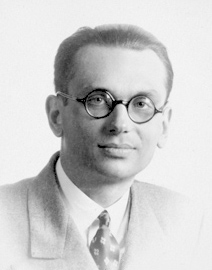


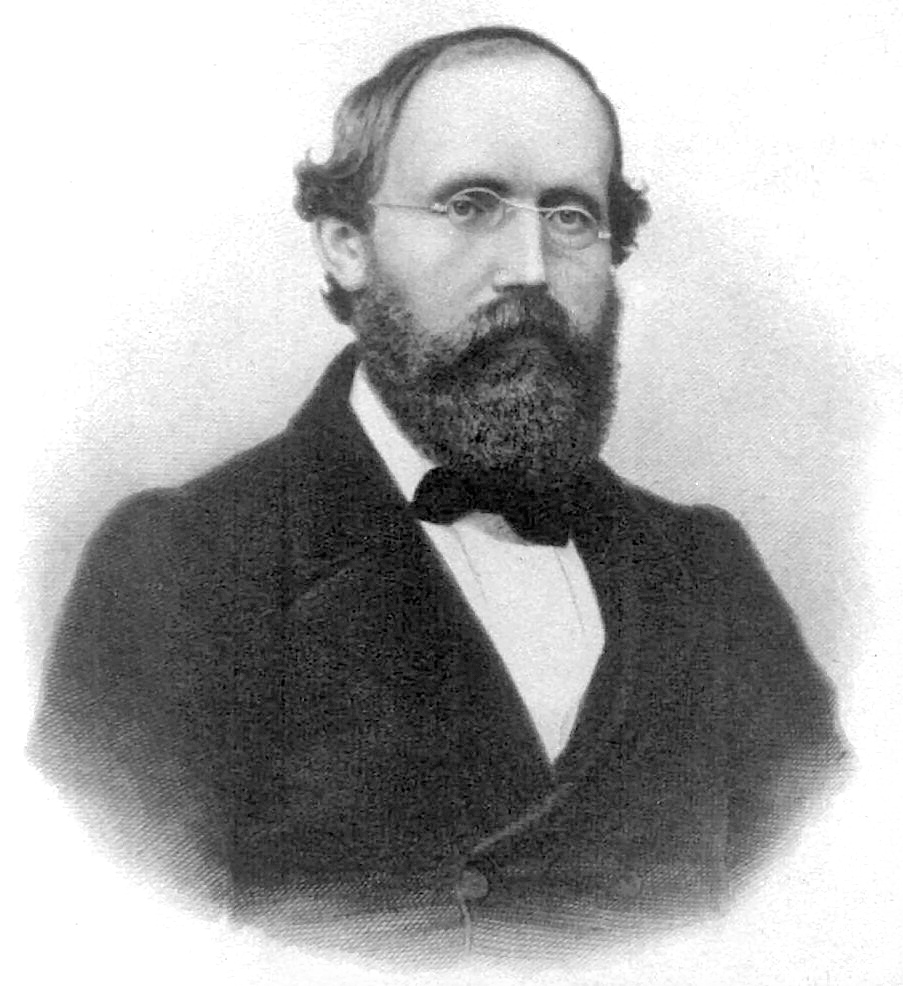


1. Foundations, logic, and formal limits
1.1 Proof, logic, and operational meaning
- Classical logic runs most standard math; constructive reading demands operational content when possible.
Logic + proof methods + discrete structures as infrastructure.
Free access to the MCS text used with 6.042J.
1.2 Axioms and set-theoretic standing ground
1.3 Hilbert’s program → Gödel’s incompleteness
- No sufficiently strong formal system can be both complete and able to prove its own consistency.
- Closed “total law” fantasies leave truths outside—or break internally.
Precise statements, scope, and downstream implications.
Working set theorist’s explanation without mystification.
1.4 Computation → undecidability (the halting wall)
- There exist precisely-defined questions that no algorithm can decide in full generality.
- “Total governing computation” must ignore, lie about, or conventionally patch undecidable zones.
Turing machines + Entscheidungsproblem + the boundary of algorithmic rule.
Context layer (optional history nodes)
Euclid → Newton/Leibniz → Euler/Gauss → Hilbert/Cantor/Cauchy → Gödel/Turing, with technical literacy.
Foundations crisis as civilizational pressure-field (use as scaffold, not proof).
2. Geometry & topology: space, boundary, curvature, invariants
2.1 Euclid: axioms → constructed space
Elements with diagrams + navigation; direct access to the axiomatic method.
Classic translation + commentary; use as deep primary layer.
2.2 Non-Euclidean geometry → Riemannian manifolds
- Changing the parallel postulate changes the universe.
- Riemann generalizes geometry via manifolds, metrics, curvature.
Foundational text: metric, curvature, the redefinition of geometry.
Modern machinery: manifolds → geodesics → curvature.
2.3 Topology: invariants under deformation
- Topology tracks connectivity/holes—features that require global surgery to change.
Adversarial geometry node (optional)
Finitist critique + re-axiomatization pressure-test.
Gauss/Lobachevsky/Bolyai lineage + structural shift.
3. Algebra & symmetry: transformation, structure, conservation
3.1 Algebra as allowed operations
- Groups/rings/fields formalize what transformations are permitted and what identities become invariant.
Groups → rings → fields with examples and exercises.
3.2 Noether: symmetry → conservation
Original theorem locus (translation/scan).
High-quality bridge from theorem to modern physics intuition.
4. Calculus & real analysis: change, limits, approximation error
4.1 Calculus (Newton/Leibniz): rates and totals
Canonical technique + theorem layer (with MIT structure).
4.2 Cauchy → rigor via limits; analysis as error-control
Sequences, continuity, compactness, Cantor sets, integration.
4.3 Measure, integration, ergodic background
Lebesgue measure/integration, Lp spaces; bridge to probability/info.
Full-course, example-heavy reinforcement layer.
5. Linear algebra & Hilbert spaces: many dimensions, one language
5.1 Vectors, matrices, systems (Gauss elimination)
Geometric intuition: transformations, eigenvectors, determinants.
Four fundamental subspaces, rank, least squares, eigen/SVD.
5.2 Operator-first viewpoint (Hilbert space adjacency)
Eigenvalues/operators early; clarity on structure over computation.
Inner products → infinite-dimensional “vectors” (functions), operators, spectra.
6. Discrete math, computation, structure, hardness
6.1 Combinatorics, graphs, number theory
- Discrete structures are the substrate for cryptography and protocol verifiability.
- Hardness is a defensive primitive: easy-to-verify / hard-to-invert.
Primary discrete spine; proofs as infrastructure.
Recurrences, sums, generating functions, asymptotics (pre-algorithms backbone).
6.2 Cantor: different sizes of infinity
- Countable vs uncountable; diagonalization; the continuum as “denser” than enumeration.
7. Differential equations & dynamical systems: evolution over time
7.1 ODEs/PDEs: state evolution
Fast method reference with examples and practice.
7.2 Linear systems as dynamics (x′ = Ax)
Eigenvalues as modes; linear algebra as dynamics language.
Vector fields/flows; “unsolvable” as structure, not failure.
7.3 Nonlinearity, chaos, synchronization (Strogatz)
Bifurcations, attractors, chaos; coupled oscillators and networks.
Equilibria, linearization, eigenvalue criteria; attractor regimes.
8. Probability, information, and randomness
8.1 Kolmogorov: probability axioms
- Probability as measure on a sigma-algebra: (Ω, 𝔽, P).
- Statistics adds modeling choices where values and priorities enter.
8.2 Shannon: entropy and channel limits
Entropy, mutual information, channel capacity; founding paper.
8.3 Randomness as a design tool
- Randomized algorithms can be simpler and more robust.
- Cryptographic security depends on high-quality entropy.
- Randomness frustrates predictive capture where determinism would be modeled.
Algorithmic complexity node (Kolmogorov complexity)
Standard reference: complexity, randomness, applications.
9–10. Meta-structure & incentives: categories + games
9. Category theory: structure-preserving translation
- Objects are less important than morphisms; composition is law.
- Functors and natural transformations track what invariants survive translation.
Applied category theory as interface language for system-of-systems.
Concrete entry via composition and types (use as bridge, not final authority).
10. Game theory & mechanism design: math at the incentive boundary
- Equilibria reveal which rule-sets stabilize (and which destabilize) under strategic behavior.
- Information design (what is public/private) is as decisive as payoffs.
Mechanism design bridge (optional)
Strategic interaction with computational constraints (canonical reference).
11. Continuous vs discrete: the fault line of simulation
Discrete control systems
- Finite states; sampled signals; databases; graphs.
- Verifiability, cryptography, auditability live here.
Continuous reality
- Fields, flows, analog noise, chaotic sensitivity.
- Discretization is approximation; sometimes valid, sometimes a lie.
12. Synthesis: anti-capture design constraints extracted from core math
- Axioms explicit; incompleteness assumed. Build upgrade paths and out-of-scope zones (Gödel/Turing).
- Invariants embedded structurally. Use symmetry/topology ideas: what must not change is encoded as a conserved quantity or a “requires-global-surgery” feature.
- Hardness + easy verification. Defensive guarantees sit behind hard problems; honest participation stays cheap.
- Nonlinearity respected. Avoid brittle global synchronization; understand attractors and tipping points (Strogatz).
- Representation audited. Change basis/model/category to expose null spaces and blind spots (Strang’s geometric view).
- Formal zones vs wild zones separated. Lock settlement/integrity; refuse total mathematization of irreducible interior domains.
- Information treated as a resource. Entropy, compression, and channel limits constrain what can be communicated and what can be hidden (Shannon/Kolmogorov).
Resource Index (one-glance)
3B1B — Essence of Calc · MIT 18.01 · Francis Su — Real Analysis · Tao — Measure Theory
SEP — Gödel · Hamkins lecture · Turing (1936) PDF · SEP — Turing machines